
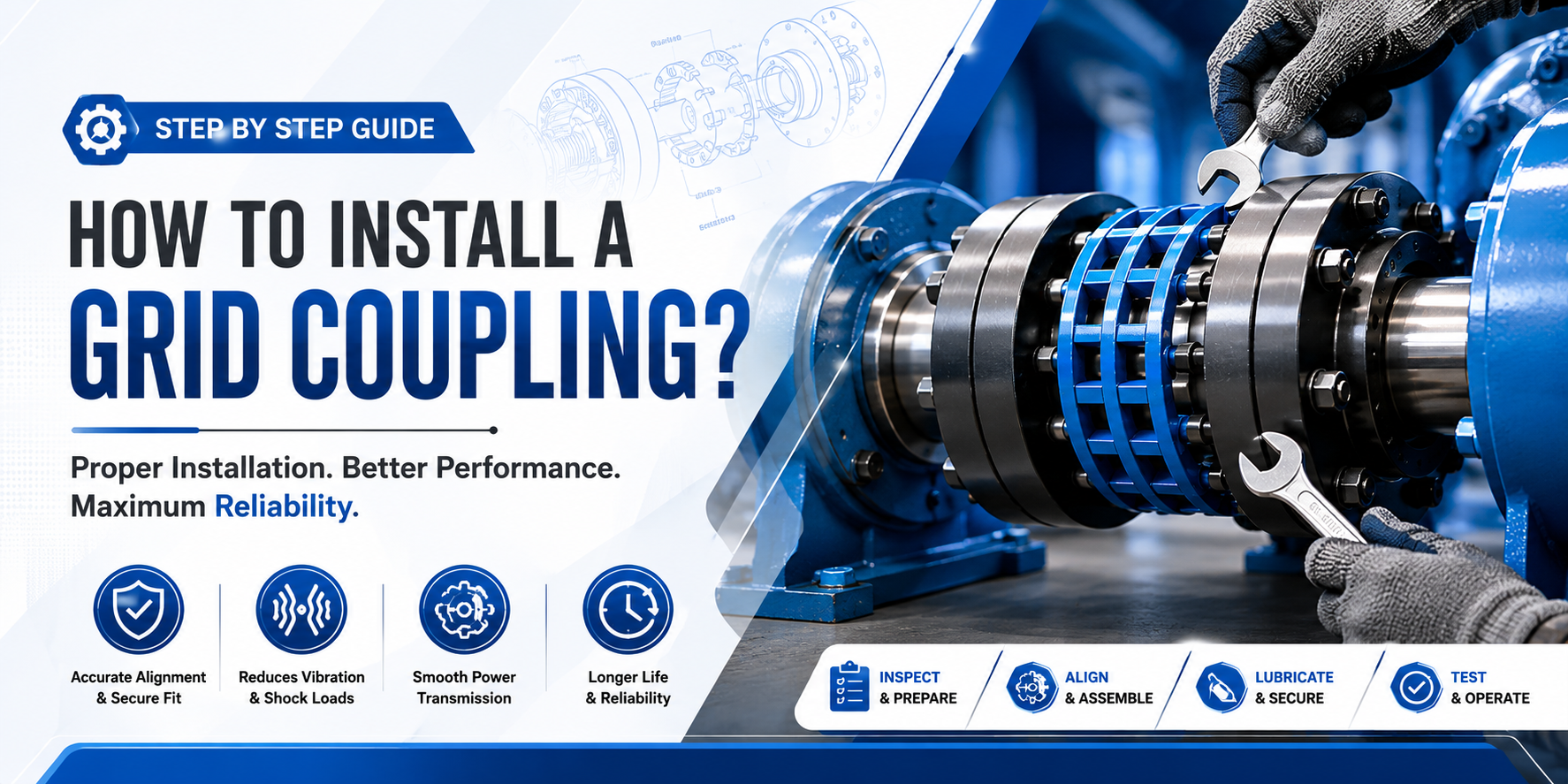
Grid couplings are widely used in industrial power transmission systems because they can handle high torque, absorb shock loads, and reduce vibration. Industries such as mining, steel, cement, and power generation rely on grid couplings to ensure smooth machinery operation and minimize downtime.
Proper installation of a grid coupling is essential for achieving maximum performance and extending equipment life. Incorrect installation can lead to excessive vibration, premature wear, and costly maintenance issues.
Before installation, it is helpful to understand the basics of industrial coupling systems. You can read our Complete Guide to Industrial Couplings and Power Transmission Systems for a detailed overview.
1. Safety Inspection Before Installation
Before starting the installation process:
• Disconnect all power sources
• Lock out and tag out the equipment
• Wear appropriate safety gear
• Inspect shafts for damage or wear
• Clean shaft surfaces thoroughly
A clean and safe installation environment helps ensure accurate alignment and reliable coupling performance.
2. Inspect Coupling Components
Carefully inspect all grid coupling components before assembly.
Check for:
• physical damage
• corrosion
• manufacturing defects
• missing hardware
Any damaged component should be replaced before installation.
3. Install the Coupling Hubs
Mount the coupling hubs onto both shafts according to the manufacturer’s recommendations.
Important points:
• ensure proper shaft fitment
• align keyways correctly
• tighten fasteners securely
• avoid excessive force during installation
Proper hub installation is critical for efficient torque transmission.
For applications requiring flexible shaft compensation, you may also explore UTEX Curved Jaw Coupling solutions.
4. Set the Correct Hub Gap
The distance between both coupling hubs must match the recommended installation specifications.
Incorrect spacing can lead to:
• excessive vibration
• premature wear
• reduced coupling life
• alignment issues
Use measuring tools to verify the required gap before proceeding.
5. Check Shaft Alignment
Accurate shaft alignment is one of the most important installation steps.
Verify:
• angular alignment
• parallel alignment
• axial positioning
Laser alignment tools can improve accuracy and reduce installation errors.
For applications involving significant shaft offset correction, consider Schmidt Kupplung systems designed for advanced misalignment compensation.
6. Install the Grid Element
Once alignment is confirmed, install the grid element into the coupling grooves.
Ensure:
• proper seating of the grid
• even placement around the circumference
• no twisting or distortion of the grid
The grid element provides shock absorption and vibration damping during operation.
7. Apply Lubrication
Most grid couplings require lubrication for optimal performance.
Benefits include:
• reduced friction
• improved service life
• lower operating temperature
• reduced component wear
Follow the manufacturer’s lubrication recommendations carefully.
8. Install and Secure the Covers
After lubrication:
• position the coupling covers
• install gaskets if required
• tighten all fasteners evenly
• verify proper sealing
The cover protects internal components from contamination and lubricant loss.
9. Perform Final Inspection
Before commissioning the equipment:
• rotate the coupling manually
• verify alignment again
• inspect all fasteners
• check lubrication levels
• ensure free movement of rotating parts
A final inspection helps prevent operational issues after startup.
Why Proper Grid Coupling Installation Matters
Correct installation helps:
• improve power transmission efficiency
• reduce vibration and shock loads
• increase coupling life
• minimize maintenance costs
• improve machinery reliability
In systems involving rotating equipment, proper alignment between the coupling and DRIVE SHAFT is essential for long term performance and reduced wear.
Final Thoughts
Grid couplings are among the most reliable solutions for heavy duty industrial applications. However, their performance depends heavily on correct installation and alignment. By following proper installation procedures and regular maintenance practices, industries can maximize equipment uptime and reduce unexpected failures.
FAQ Section
1. What should be checked before installing a grid coupling?
Before installing a grid coupling, inspect the shafts, keys, hubs, and coupling components for damage or wear. Ensure all surfaces are clean and verify that the equipment is properly isolated from power sources.
2. How much shaft misalignment is acceptable during grid coupling installation?
Grid couplings can accommodate limited angular, parallel, and axial misalignment. However, proper shaft alignment should always be achieved according to manufacturer specifications to maximize coupling life and performance.
3. Is lubrication required when installing a grid coupling?
Yes. Most grid couplings require lubrication during installation. Proper lubrication reduces friction, minimizes wear, improves performance, and extends the service life of the coupling.
4. What are the common mistakes to avoid during grid coupling installation?
Common installation mistakes include improper shaft alignment, incorrect hub spacing, insufficient lubrication, loose fasteners, and failure to inspect components before assembly.


