
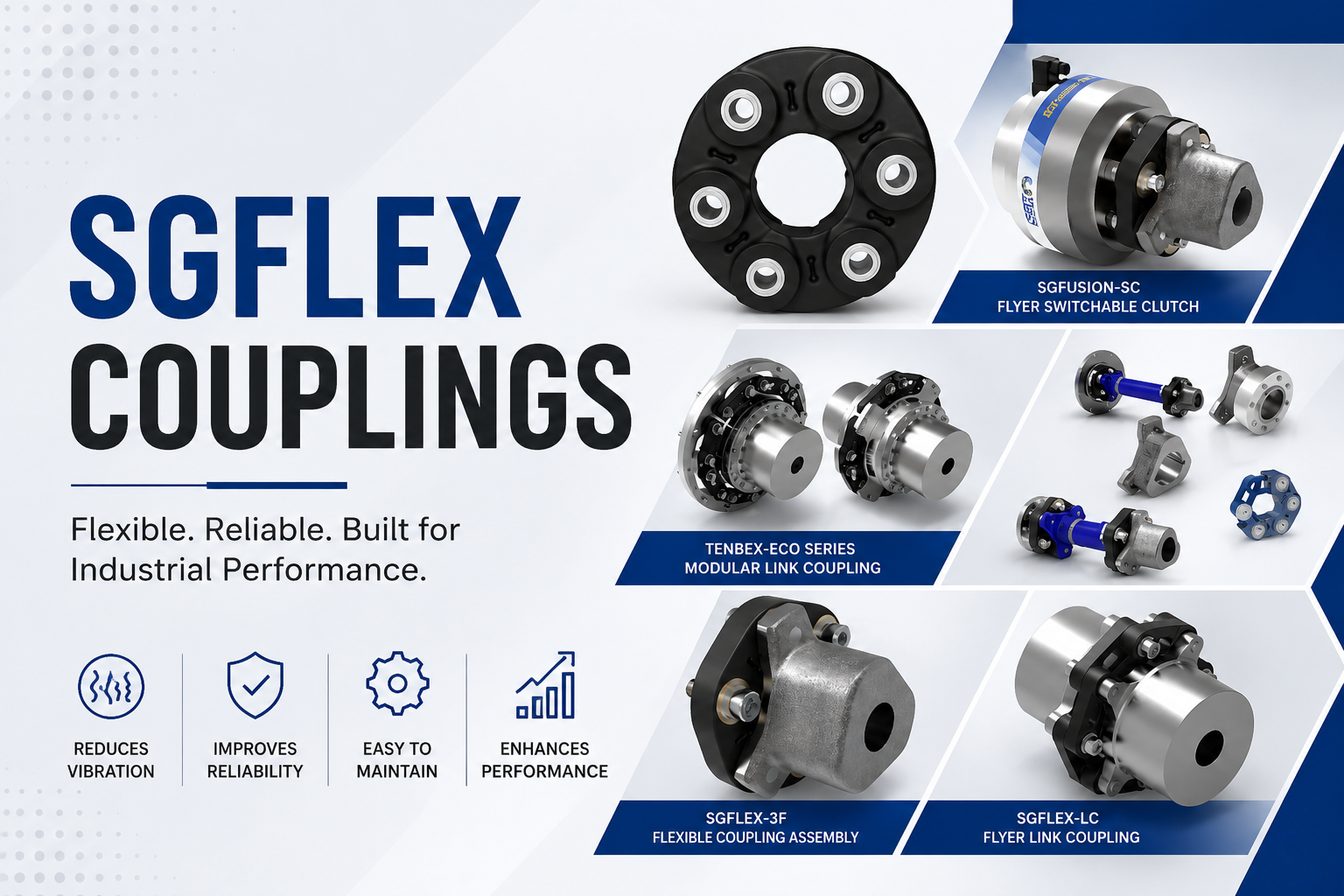
Industrial machinery is expected to perform reliably under demanding operating conditions. Whether it is a mining conveyor, a power generation system, a compressor, or a heavy duty industrial drive, smooth power transmission is essential for maintaining efficiency and reducing downtime. One component that plays a crucial role in achieving this is the SGF Coupling.
Known for its flexibility, vibration damping capabilities, and reliable torque transmission, an SGF coupling is widely used in industrial applications where equipment protection and operational stability are important. As industries focus on improving machine life and reducing maintenance costs, SGF couplings have become an increasingly preferred solution for modern power transmission systems.
Understanding SGF Couplings
An SGF coupling is a flexible coupling designed to connect rotating shafts while compensating for minor misalignment, reducing vibration, and absorbing shock loads. Unlike rigid coupling systems that directly transfer operational stress between connected components, SGF couplings provide a cushioning effect that helps protect machinery from excessive mechanical forces.
In industrial environments, machinery rarely operates under perfectly stable conditions. Equipment startup, load fluctuations, and sudden torque changes can create stress on motors, gearboxes, pumps, and shafts. SGF couplings help minimize these challenges while maintaining smooth power transmission.
For a complete overview of industrial coupling technologies, visit RSV Industries .
Why Industries Use SGF Couplings
Many industrial facilities experience challenges such as:
• excessive vibration
• equipment wear
• shaft misalignment
• shock loading
• unexpected downtime
SGF couplings are specifically designed to address these issues by providing flexibility within the power transmission system.
Their design allows machinery to operate more smoothly while reducing the stress transmitted to connected components.
Key Benefits of SGF Couplings
Excellent Vibration Damping
One of the biggest advantages of SGF couplings is their ability to absorb vibration generated during machine operation.
Benefits include:
• smoother machinery performance
• reduced noise levels
• lower bearing stress
• improved equipment life
In applications involving compressors, generators, and industrial drives, vibration control directly contributes to improved reliability.
Protection Against Shock Loads
Industrial machinery often experiences sudden load variations during startup, shutdown, or changing production requirements.
SGF couplings help:
• absorb shock loads
• reduce torque spikes
• protect drive components
• improve operational stability
This protection can significantly reduce maintenance requirements over time.
Compensation for Misalignment
Even with proper installation, shaft alignment may change because of thermal expansion, foundation movement, or operational loads.
SGF couplings accommodate:
• angular misalignment
• parallel misalignment
• axial movement
This flexibility helps prevent unnecessary wear on shafts and bearings.
Reduced Maintenance Costs
Equipment that operates under lower stress generally requires less maintenance.
Organizations using SGF couplings often benefit from:
• reduced downtime
• lower replacement costs
• longer service intervals
• improved machine availability
Common Industrial Applications of SGF Couplings
SGF couplings are used across a wide range of industries because of their versatility and reliability.
Power Generation Industry
Generators, turbines, and auxiliary equipment rely on stable power transmission systems to maintain continuous operation.
Mining Industry
Mining machinery operates under severe load conditions where shock absorption and vibration damping are essential.
Cement Industry
Rotary equipment, crushers, and conveyors benefit from the flexibility offered by SGF couplings.
Marine Applications
Marine propulsion systems and auxiliary equipment use SGF couplings to improve operational stability and equipment protection.
Industrial Compressors and Pumps
These applications often require smooth torque transmission and vibration control, making SGF couplings an effective solution.
To explore industrial coupling solutions across different sectors, visit our Industrial Coupling Product Category.
How to Select the Right SGF Coupling
Before selecting an SGF coupling, industries should evaluate:
• torque requirements
• operating speed
• shaft alignment conditions
• environmental factors
• vibration levels
• maintenance expectations
Choosing the correct coupling helps maximize equipment performance and operational efficiency.
SGF Coupling vs Other Industrial Couplings
Different coupling types serve different purposes.
A Hydax Coupling is typically selected for heavy duty torque transmission applications.
A Gear Coupling performs well in high torque industrial environments where durability is a priority.
A Disc Coupling is often preferred for high speed applications requiring precision alignment.
Final Thoughts
SGF couplings have become an important component in modern industrial power transmission systems. Their ability to absorb vibration, compensate for shaft movement, and protect machinery from shock loads makes them suitable for demanding industrial environments.
Whether used in mining operations, power generation facilities, marine systems, compressors, or manufacturing plants, SGF couplings help improve reliability, reduce maintenance costs, and support long term equipment performance.
FAQ
1. What is an SGF Coupling used for in industrial machinery?
SGF Couplings are used to connect rotating shafts while reducing vibration, absorbing shock loads, and improving power transmission efficiency. They are commonly installed in generators, compressors, pumps, mining equipment, and heavy industrial drives.
2. What are the benefits of using an SGF Coupling?
SGF Couplings help reduce vibration, compensate for shaft misalignment, protect machinery from shock loads, lower maintenance costs, and improve equipment reliability in demanding industrial environments.
3. Which industries commonly use SGF Couplings?
SGF Couplings are widely used in power generation plants, mining operations, marine systems, cement industries, manufacturing facilities, industrial compressors, and pump applications.
4. Can SGF Couplings reduce vibration and equipment wear?
Yes. SGF Couplings are specifically designed to dampen vibration and absorb torsional shocks, helping reduce wear on bearings, shafts, gearboxes, and connected machinery components.
5. How do I choose the right SGF Coupling for my application?
The right SGF Coupling depends on factors such as torque requirements, operating speed, shaft size, environmental conditions, alignment requirements, and the type of machinery being driven.


