
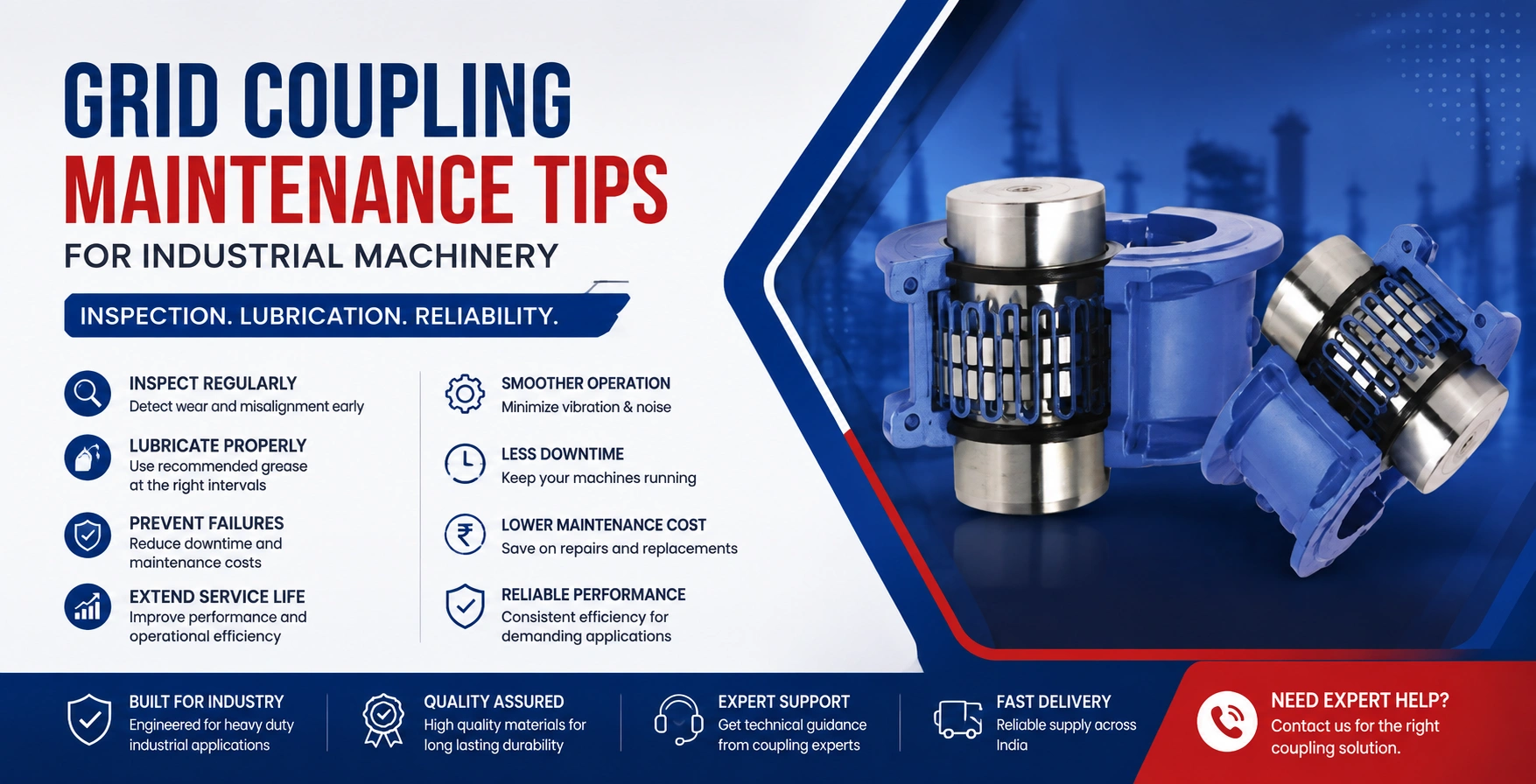
Industrial machinery operates under demanding conditions where every component plays a vital role in maintaining efficiency and reliability. Among these components, the Grid Coupling is widely used for transmitting torque while absorbing shock loads, vibration, and minor shaft misalignment. Industries such as steel, cement, mining, power generation, paper manufacturing, and material handling rely on grid couplings because of their durability and dependable performance.
Like any mechanical component, a grid coupling requires regular inspection, lubrication, and preventive maintenance to ensure long service life. Neglecting maintenance can lead to excessive vibration, unexpected downtime, higher repair costs, and premature equipment failure.
In this guide, we will discuss the importance of Grid Coupling Maintenance, inspection procedures, lubrication practices, maintenance schedules, and practical tips that help improve equipment performance and reduce operational costs.
What is Grid Coupling Maintenance?
Grid coupling maintenance is the process of inspecting, cleaning, lubricating, aligning, and servicing a grid coupling to maintain its efficiency and extend its operating life.
A proper maintenance program helps identify minor issues before they develop into costly failures. Regular servicing also ensures smooth power transmission between connected shafts while protecting motors, pumps, gearboxes, and other rotating equipment.
Routine maintenance generally includes:
- Visual inspection
- Checking grid spring wear
- Lubrication replacement
- Inspecting seals
- Checking shaft alignment
- Tightening fasteners
- Monitoring vibration and temperature
Following a preventive maintenance schedule significantly reduces unexpected equipment failures.
Why Regular Grid Coupling Maintenance is Important
Industrial machinery often runs continuously under heavy loads. Without routine maintenance, a grid coupling can experience wear that eventually affects the entire drive system.
Benefits of proper maintenance include:
- Increases coupling service life
- Reduces machine downtime
- Improves torque transmission
- Prevents unexpected equipment failures
- Reduces maintenance costs
- Minimizes vibration and noise
- Improves equipment safety
- Protects bearings, shafts, and gearboxes
- Improves overall plant productivity
For industries where production interruptions are expensive, preventive maintenance is always more cost effective than emergency repairs.
Common Signs Your Grid Coupling Needs Maintenance
Maintenance engineers should regularly inspect grid couplings for early warning signs of wear.
Excessive Vibration
Unusual vibration often indicates shaft misalignment, damaged grid springs, or worn coupling components.
Unusual Noise
Grinding, rattling, or knocking sounds may indicate excessive wear or insufficient lubrication.
Grease Leakage
Grease leaking from the coupling cover usually indicates damaged seals or overfilled lubrication chambers.
Overheating
High operating temperatures may result from inadequate lubrication, excessive loading, or poor alignment.
Visible Wear
Inspect the grid spring and hub teeth for cracks, corrosion, pitting, or abnormal wear patterns.
Loose Fasteners
Loose bolts can reduce coupling performance and increase the risk of mechanical failure.
Grid Coupling Inspection Checklist
Routine inspections should include every major component of the coupling.
| Inspection Point | What to Check | Recommended Action |
|---|---|---|
| Grid Spring | Cracks, wear, deformation | Replace if damaged |
| Hub Teeth | Surface wear, corrosion | Repair or replace |
| Coupling Cover | Physical damage | Replace if required |
| Seals | Grease leakage | Install new seals |
| Bolts | Tightness | Retighten to specification |
| Lubricant | Cleanliness and level | Replace old grease |
| Shaft Alignment | Angular and parallel alignment | Realign shafts |
| Vibration | Excessive movement | Investigate immediately |
Perform inspections according to operating conditions and manufacturer’s recommendations.
Step by Step Grid Coupling Maintenance Process
Step 1: Shut Down Equipment
Completely isolate the machine before beginning maintenance work. Follow all lockout and tagout procedures.
Step 2: Remove the Coupling Cover
Carefully remove the coupling cover without damaging seals or fasteners.
Step 3: Clean Old Lubricant
Remove contaminated grease using approved cleaning materials. Avoid mixing old and new lubricants.
Step 4: Inspect the Grid Spring
Check for:
- Cracks
- Broken segments
- Uneven wear
- Corrosion
- Fatigue
Replace damaged grid springs immediately.
Step 5: Inspect Hub Teeth
Inspect both hubs for:
- Wear
- Pitting
- Rust
- Surface damage
Damaged hubs reduce torque transmission efficiency.
Step 6: Check Shaft Alignment
Use dial indicators or laser alignment tools to verify shaft alignment.
Correct alignment reduces vibration and extends bearing life.
Step 7: Replace Seals if Necessary
Inspect seals for leakage or wear. Replace damaged seals to prevent lubricant contamination.
Step 8: Apply Fresh Lubricant
Use the recommended lubricant according to the coupling manufacturer’s specifications.
Ensure grease reaches all required areas inside the coupling.
Step 9: Reassemble the Coupling
Reinstall the cover, tighten all bolts evenly, and ensure proper sealing.
Step 10: Test Run
Operate the machine under normal conditions and monitor:
- Noise
- Temperature
- Vibration
- Grease leakage
Any abnormal condition should be investigated immediately.
Grid Coupling Lubrication Best Practices
Lubrication is one of the most important aspects of grid coupling maintenance.
Proper lubrication:
- Reduces friction
- Minimizes wear
- Controls operating temperature
- Protects against corrosion
- Extends component life
Best Practices
- Always use the lubricant recommended by the manufacturer.
- Never mix different grease types.
- Remove contaminated grease before refilling.
- Avoid overfilling the coupling.
- Replace lubricant at recommended intervals.
- Store lubricants in clean, dry conditions.
Poor lubrication is one of the leading causes of premature grid coupling failure.
Recommended Maintenance Schedule
Maintenance frequency depends on operating conditions.
| Operating Condition | Inspection | Lubrication |
|---|---|---|
| Normal Operation | Every 3 Months | Every 6 Months |
| Heavy Duty Operation | Monthly | Every 3 Months |
| Mining Industry | Monthly | Every 2 Months |
| Cement Plants | Monthly | Every 2 Months |
| Steel Industry | Monthly | Every 2 Months |
| Outdoor Applications | Every 2 Months | Every 3 Months |
Machines operating in dusty, wet, or high-temperature environments may require more frequent inspections.
Common Grid Coupling Maintenance Mistakes
Avoid these common mistakes to maximize coupling performance:
- Ignoring minor vibration
- Delaying lubrication
- Using incorrect grease
- Reusing damaged seals
- Operating with shaft misalignment
- Over-tightening fasteners
- Skipping routine inspections
- Replacing only one worn component
- Ignoring manufacturer recommendations
Even small maintenance mistakes can significantly reduce the service life of the coupling.
Why Choose RSV Industries?
RSV Industries Pvt. Ltd. has been delivering high-quality industrial coupling solutions since 1969. We supply reliable Grid Couplings for demanding industrial applications across steel plants, cement factories, mining operations, power plants, and material handling systems.
Our strengths include:
- Over five decades of industry experience
- Wide range of industrial coupling solutions
- Premium quality products
- Technical support for coupling selection
- Fast delivery across India
- Reliable after-sales assistance
Whether you require a new grid coupling or expert guidance on maintenance and replacement, our team is ready to help you find the right solution.
Frequently Asked Questions
How often should a Grid Coupling be inspected?
Most industrial applications should be inspected every three months, while heavy-duty operations require monthly inspections.
Why is lubrication important?
Lubrication reduces friction, prevents wear, controls heat, and extends coupling life.
What causes Grid Coupling failure?
Common causes include poor lubrication, shaft misalignment, excessive shock loads, contamination, and neglected maintenance.
When should the grid spring be replaced?
Replace the grid spring immediately if cracks, deformation, or excessive wear are observed.
Which industries commonly use Grid Couplings?
Grid couplings are widely used in steel plants, cement industries, mining operations, power plants, paper mills, sugar factories, and material handling systems.
Conclusion
Regular Grid Coupling Maintenance is essential for improving equipment reliability, reducing downtime, and extending the service life of industrial machinery. By following a structured maintenance schedule that includes routine inspections, proper lubrication, alignment checks, and timely replacement of worn components, industries can prevent costly breakdowns and ensure smooth power transmission.
If you are looking for high-quality Grid Couplings or need expert assistance with coupling selection and maintenance, RSV Industries Pvt. Ltd. offers dependable industrial coupling solutions backed by decades of industry expertise. Contact our team today to discuss your application and find the right coupling solution for your machinery.


