
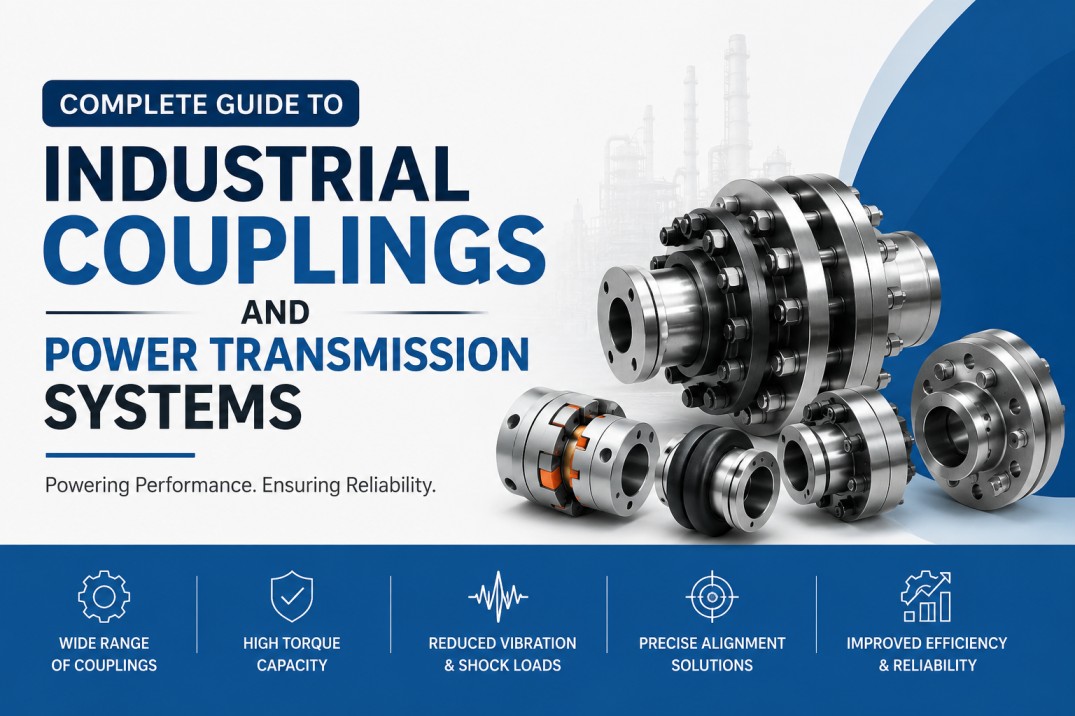
Industrial machines need strong and reliable systems to transfer power from one part of the machine to another. This process is called power transmission. One of the most important components used in power transmission systems is the industrial coupling.
Industrial couplings help connect rotating shafts and transfer torque smoothly between machines. They are widely used in industries such as steel plants, cement factories, mining operations, power plants, paper mills, and manufacturing units.
Choosing the right coupling improves machine performance, reduces vibration, and helps industrial equipment work efficiently for a longer time.
What is an Industrial Coupling?
An industrial coupling is a mechanical device used to connect two rotating shafts together. Its main purpose is to transfer power and torque from one shaft to another while handling small alignment changes and machine movement.
Couplings also help:
-
- reduce vibration
- absorb shock loads
- improve machine stability
- protect equipment from damage
- increase machinery life
Industrial couplings are important because heavy machinery works under high pressure and continuous operation. Without proper coupling systems, machines can fail or stop working efficiently.
What is a Power Transmission System?
A power transmission system is a setup that transfers mechanical power from a motor or engine to industrial equipment.
A typical industrial power transmission system includes:
-
- motors
- shafts
- couplings
- gearboxes
- pulleys
- belts
- bearings
These components work together to move machinery smoothly and efficiently.
Couplings are considered one of the most important parts because they help maintain proper power flow between connected equipment.
Why Industrial Couplings are Important
Industrial machinery operates under heavy loads and difficult conditions. Machines often face:
-
- vibration
- heat
- dust
- shaft movement
- heavy torque
- sudden shock loads
Industrial couplings help manage these conditions and improve machine reliability.
A good coupling solution can:
-
- reduce downtime
- improve safety
- lower maintenance costs
- increase machine efficiency
- protect shafts and bearings
This is why industries carefully select couplings based on machine requirements.
Types of Industrial Couplings
Different machines require different types of couplings. Each coupling is designed for a specific industrial application.
Gear Couplings
Gear couplings are strong and durable couplings used in heavy duty applications. They are designed for high torque transmission.
Common Uses
-
- steel plants
- mining machinery
- cement industries
- heavy conveyors
Benefits
-
- handles high torque
- long service life
- suitable for heavy machinery
Grid Couplings
Grid couplings are used where shock loads and vibration are common. They use a flexible metallic grid element between two hubs.
Common Uses
-
- crushers
- pumps
- compressors
- conveyor systems
Benefits
-
- absorbs vibration
- reduces shock loads
- protects equipment
Jaw Couplings
Jaw couplings use flexible elastomer elements to connect shafts. They are simple and commonly used in industrial machines.
Common Uses
-
- pumps
- electric motors
- compressors
- automation equipment
Benefits
-
- low maintenance
- easy installation
- handles small misalignment
Disc Couplings
Disc couplings are used in high speed industrial applications where precision is important.
Common Uses
-
- turbines
- high speed pumps
- compressors
Benefits
-
- maintenance free
- high accuracy
- suitable for high speed operation
Pin Bush Couplings
Pin bush couplings use flexible rubber bushes to absorb vibration and shock loads.
Common Uses
-
- industrial mixers
- crushers
- compressors
Benefits
-
- smooth power transmission
- vibration reduction
- durable design
Tyre Couplings
Tyre couplings use rubber tyre elements for flexibility and shock absorption.
Common Uses
-
- conveyor systems
- heavy machinery
- industrial drives
Benefits
-
- handles misalignment
- reduces vibration
- easy to maintain
Factors to Consider When Choosing a Coupling
Selecting the right industrial coupling is important for machine performance and long term reliability.
Torque Capacity
The coupling must be able to handle the machine’s torque requirements. Heavy machinery usually requires couplings with high torque capacity.
Shaft Misalignment
Machines are not always perfectly aligned. Flexible couplings help manage:
-
- angular misalignment
- parallel misalignment
- axial movement
This reduces stress on machinery components.
Operating Environment
Industrial conditions can be harsh. Dust, moisture, heat, and chemicals can affect coupling performance.
The coupling should be selected according to the working environment.
Speed Requirements
High speed machines require precision couplings such as disc couplings.
Low speed heavy load machines often use gear couplings or grid couplings.
Maintenance Needs
Some couplings require regular lubrication and maintenance, while others are designed for maintenance free operation.
Industries usually prefer low maintenance solutions to reduce downtime.
Industrial Applications of Couplings
Industrial couplings are used in many sectors because they improve machinery performance and operational stability.
Steel Industry
Steel plants use heavy duty couplings for rolling mills and processing machinery.
Cement Industry
Cement plants use couplings in crushers, conveyors, and rotary systems operating under dusty conditions.
Mining Industry
Mining equipment requires strong couplings that can handle shock loads and vibration.
Power Plants
Power generation systems use precision couplings for turbines and compressors.
Oil and Gas Industry
Oil and gas operations require reliable couplings for pumps, compressors, and rotating equipment.
Benefits of Industrial Couplings
Modern industrial couplings provide many operational benefits such as:
-
- better power transmission
- reduced machine vibration
- improved efficiency
- lower maintenance costs
- longer equipment life
- smoother machine operation
Proper coupling selection also helps industries avoid unexpected machine breakdowns.
Future of Industrial Power Transmission Systems
Industrial technology is improving rapidly. Modern industries now prefer:
-
- energy efficient systems
- high precision couplings
- maintenance free designs
- durable power transmission solutions
Advanced industrial coupling systems are becoming more reliable and efficient to support automation and high performance machinery.
Final Thoughts
Industrial couplings and power transmission systems are essential for smooth industrial operations. They help transfer power efficiently while protecting machinery from vibration, misalignment, and heavy loads.
Different coupling types are designed for different applications. Selecting the right coupling depends on machine type, torque requirements, speed, and operating conditions.
A reliable coupling solution improves productivity, reduces maintenance, and increases machinery life. For industries using heavy machinery, investing in the right industrial coupling system is important for long term operational success.
Frequently Asked Questions
What is the purpose of industrial couplings in machinery?
Industrial couplings are used to connect rotating shafts and transfer power efficiently between industrial machines while reducing vibration and handling shaft movement.
How do power transmission systems improve industrial performance?
Power transmission systems help transfer mechanical energy smoothly between machine components, improving efficiency, reducing downtime, and supporting continuous industrial operations.
Which coupling is commonly used for high torque applications?
Gear couplings and grid couplings are commonly used for high torque industrial applications because they provide strong torque transmission and durability.
Why are flexible couplings important in industrial machinery?
Flexible couplings help absorb shock loads, reduce vibration, and compensate for shaft misalignment, improving machinery life and operational stability.
What factors should be considered while selecting industrial couplings?
Important factors include torque capacity, operating speed, shaft alignment, environmental conditions, vibration levels, and maintenance requirements.
What industries use industrial power transmission systems?
Industries such as steel, cement, mining, oil and gas, paper manufacturing, and power generation commonly use industrial power transmission systems.
How do industrial couplings help reduce machine maintenance?
Industrial couplings reduce stress on machinery, minimize vibration, improve alignment, and protect equipment components, helping lower maintenance and repair costs.
[/vc_column_text][/vc_column][/vc_row]


